
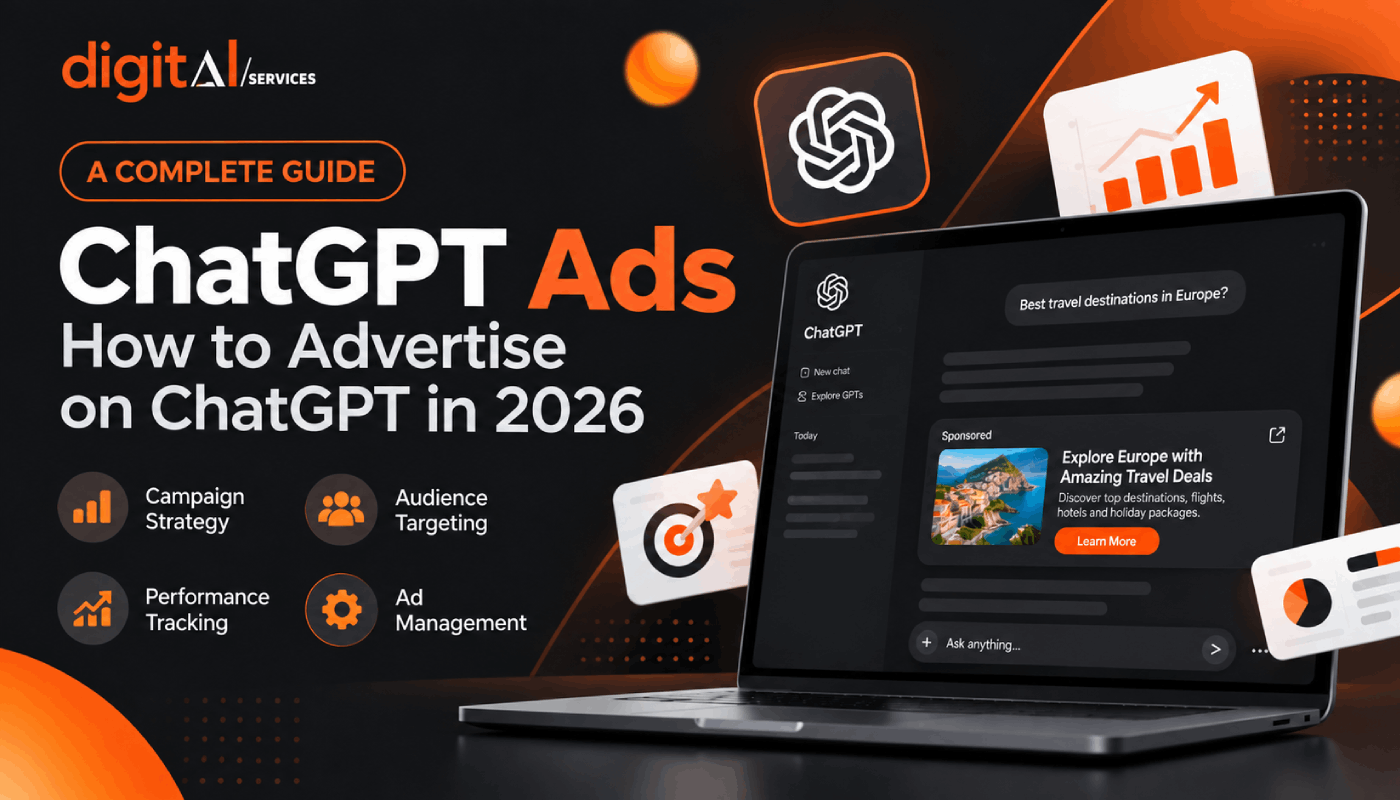
ChatGPT is becoming an important platform for businesses looking to reach customers through conversational AI. As users increasingly use ChatGPT to research products, services, brands and solutions, businesses have a new opportunity to reach relevant audiences through ChatGPT Ads. In this guide, we’ll explain how ChatGPT Ads work, who can advertise, available campaign options, targeting, costs, tracking and how businesses can get started with ChatGPT advertising. What Are ChatGPT Ads? ChatGPT Ads are paid advertisements that allow businesses to promote their products or services within the ChatGPT experience. These ads are displayed separately from ChatGPT’s responses and are clearly identified as advertisements. ChatGPT Ads are designed to help businesses reach users based on relevant conversational context and intent while keeping advertisements separate from the AI-generated answers. How Do ChatGPT Ads Work? ChatGPT advertising works differently from traditional search advertising. Instead of relying only on keywords, advertisers can use conversational context and other signals to reach users who may be interested in their products or services. Conversational Context ChatGPT can understand the context of a user’s conversation, which can help advertisers reach relevant audiences based on what users are discussing or exploring. User Intent Understanding user intent is important for advertising on ChatGPT. Businesses can create campaigns designed to reach people who are actively researching products, services or solutions. Landing Pages Advertisers can direct users to relevant landing pages where they can learn more about the product or service, make a purchase, submit an enquiry or complete another desired action. Ad Creative Ad titles, descriptions and other creative elements should clearly communicate the value of the product or service and encourage users to take the next step. Who Can Advertise on ChatGPT? ChatGPT Ads can be relevant for businesses across different industries, including ecommerce, SaaS, travel, education, real estate, finance and other digital-first businesses. The suitability of ChatGPT advertising depends on factors such as business category, campaign objectives, location and applicable advertising policies. ChatGPT Ads vs Google Ads ChatGPT Ads and Google Ads provide different advertising environments. Google Ads primarily operates across search and other Google advertising properties, while ChatGPT Ads are designed for an AI-powered conversational environment. ChatGPT Ads Google Ads Conversational environment Search and advertising environment Context and intent signals Search queries, keywords and audience signals Users exploring through conversations Users actively searching on Google AI-focused advertising experience Search, display and other advertising formats ChatGPT Ads Campaign Objectives Businesses can create campaigns based on different advertising objectives. Depending on the available campaign options, advertisers can focus on increasing visibility, generating website visits or driving conversions. Views View-focused campaigns can help businesses increase exposure and reach relevant users. Clicks Click-focused campaigns are designed to encourage users to visit a website or landing page. Conversions Conversion-focused campaigns are designed to help businesses generate valuable actions such as purchases, enquiries, registrations or other predefined goals. How Much Do ChatGPT Ads Cost? The cost of ChatGPT advertising can vary depending on factors such as campaign objective, audience, location, competition, bidding and overall campaign strategy. Businesses should avoid relying on a single fixed price when planning a ChatGPT Ads campaign. Instead, campaign budgets should be determined based on business objectives, target audience and expected performance. How to Target the Right Audience With ChatGPT Ads Audience targeting is an important part of any ChatGPT advertising strategy. Businesses can use available targeting options and campaign settings to reach audiences relevant to their products or services. Geographic Targeting Businesses can target specific markets and locations based on their campaign requirements and available targeting options. Audience Intent Understanding what users are looking for can help businesses create advertising campaigns that are more relevant to their potential customers. Context Hints Context hints can help advertisers provide additional information about the type of conversations or users that are relevant to their campaigns. How to Create a ChatGPT Ad Campaign Creating a ChatGPT Ads campaign involves several important steps. 1. Define Your Campaign Objective Start by deciding whether your primary goal is visibility, website traffic or conversions. 2. Select Your Target Market Choose the countries or locations that are relevant to your business and campaign objectives. 3. Set Your Budget Determine an appropriate advertising budget based on your goals, target audience and expected campaign duration. 4. Create Your Ad Groups Organise your campaigns and audiences into relevant ad groups to make campaign management and optimisation easier. 5. Create Your Ad Copy Write clear and relevant advertising copy that communicates your product or service and gives users a reason to visit your website. 6. Add Your Landing Page Connect your advertisement to a relevant landing page that matches the message and objective of the campaign. 7. Set Up Conversion Tracking Set up appropriate tracking so that you can measure website visits, leads, purchases and other important actions. 8. Launch and Optimise Once the campaign is live, monitor performance and make adjustments based on the available campaign data. ChatGPT Ads Tracking and Analytics Tracking is essential for understanding whether your advertising investment is generating meaningful results. Important Metrics to Monitor Impressions Clicks Click-through rate Cost per click Conversions Cost per conversion Conversion rate UTM Tracking UTM parameters can help businesses identify traffic generated through ChatGPT Ads and analyse campaign performance using their analytics platform. Conversion Tracking Conversion tracking allows businesses to understand which campaigns and advertisements are generating valuable actions on their websites. ChatGPT Ads for Different Businesses Ecommerce Businesses Ecommerce brands can use ChatGPT advertising to promote products and direct interested users to product pages or online stores. SaaS Companies SaaS companies can use ChatGPT Ads to generate awareness, website visits, free trials and software enquiries. Travel Businesses Travel companies can use advertising to promote destinations, hotels, flights, tours, travel services and booking platforms. Real Estate Businesses Real estate companies can use ChatGPT advertising to promote properties, projects, real estate services and lead-generation campaigns. Education Businesses Education companies can promote courses, programmes, certifications and other educational services to relevant audiences. Financial Services Eligible financial businesses can explore ChatGPT advertising to promote